SBX WOS / ORCHESTRATION01 / 12
01
Vehicle appointment scheduling
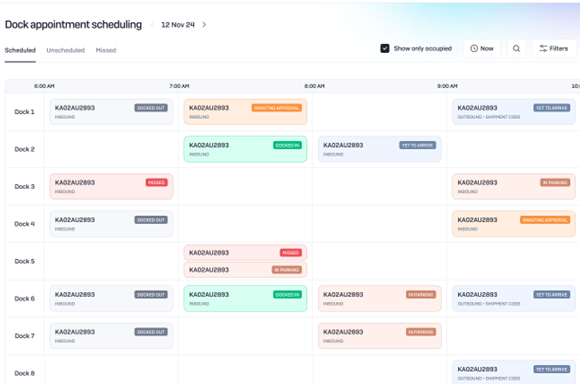
Match arrivals to dock capacity. Give every carrier a slot, pre-assign dock doors and position handling teams before the vehicle arrives.
75% fewer unplanned arrivals

SBX WOS / WAREHOUSE ORCHESTRATION SYSTEM
Stackbox WOS coordinates operators, material handling equipment, robots and automation in real time, with your existing WMS or natively within Stackbox WMS.
Trusted across complex supply chains






THE ORCHESTRATION LAYER
One system coordinates tasks, resources and routes across the warehouse in real time.
Stackbox WOS connects your existing warehouse systems to the people and equipment on the floor. It decides what needs to happen, who should do it, in what sequence, and when the plan needs to change.
Reduce aisle conflicts, idle equipment and missed handoffs with a shared, real-time plan.
See how it worksPUBLISHED WOS OUTCOMES
Reported by Stackbox across deploymentsHigher warehouse throughput
Shorter dock-to-stock time
Less pick travel
Picking accuracy
HOW WOS WORKS
Connect planning, execution and hardware to keep work moving as priorities change.
Turn orders into a feasible plan using demand, capacity and service commitments.
Sequence orders into batches or waves using dock capacity, cut-offs and order mix.
Choose containers and execution paths using order size, SKU velocity and resource needs.
Match equipment, people and stations to the planned workload.
Test workload, resource and fulfilment changes before execution.
Continuously assign work across operators, robots and equipment as conditions change.
Turn workflows into specific tasks for pickers, robots, conveyors and other assets.
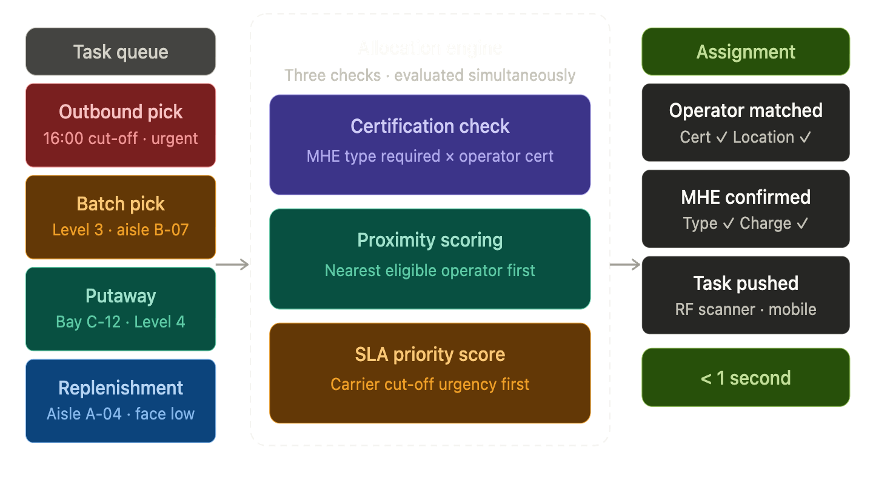
Use proximity, priority, skills and availability to assign the next task.
Balance zones and combine compatible tasks to reduce idle time and empty travel.
Respond to SLA risks, delays and failures by rerouting or reassigning work.
Coordinate equipment from different vendors through a shared hardware abstraction layer.
Standardize communication with AMRs, AS/RS, conveyors, robotics and pick-to-light systems.
Support REST, MQTT, OPC-UA, TCP/IP and custom OEM integrations.
Account for charge, load, queues and other equipment constraints.
Synchronize human and machine tasks across mixed fleets and sites.
Sync warehouse activity with your WMS, ERP, order and transport systems.
Exchange order, inventory and shipment data with SAP, Oracle, NetSuite and Dynamics.
Use webhooks and message queues to respond to operational events.
Keep physical operations and digital records aligned.
Connect partner systems, control towers, analytics and digital twin platforms.
12 ORCHESTRATION CAPABILITIES
From the first vehicle arrival to the final dispatch. Explore the decisions WOS coordinates across your operation.
Match arrivals to dock capacity. Give every carrier a slot, pre-assign dock doors and position handling teams before the vehicle arrives.
75% fewer unplanned arrivals
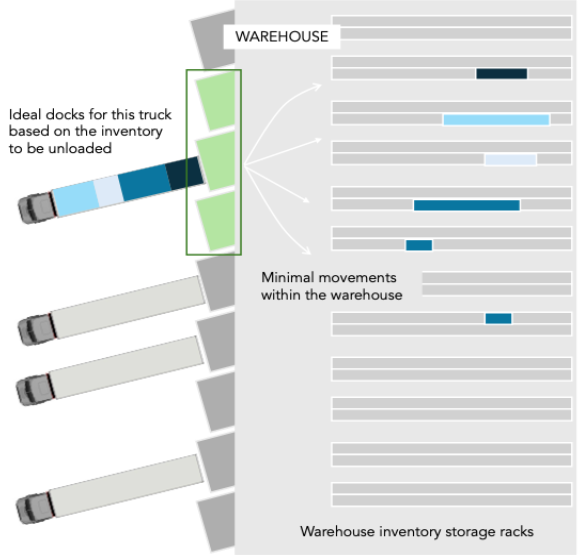
Assign vehicles to docks using cargo type, vehicle size, direction, distance to storage and available material handling equipment.
95% less assignment time
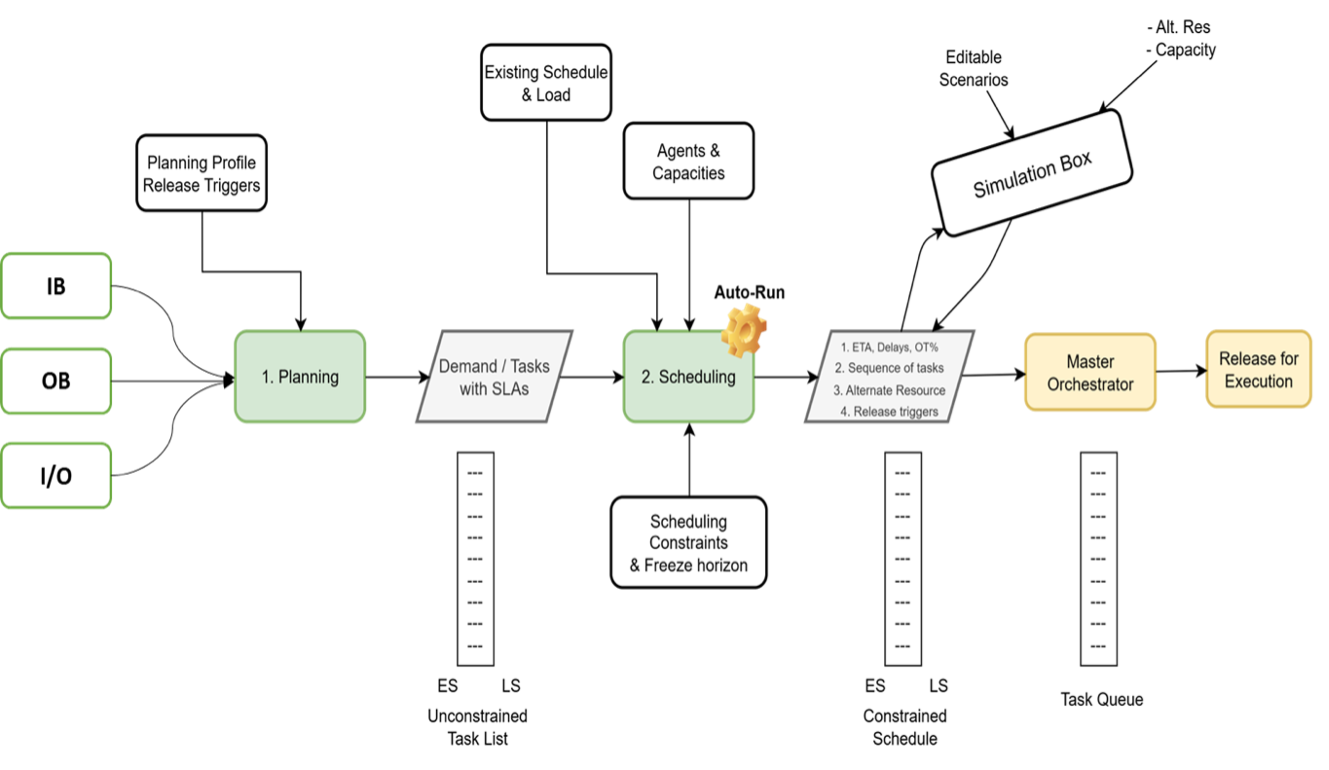
Build feasible shift plans around carrier cut-offs, order SLAs, operator certifications, equipment availability and battery state. Replan as conditions change.
95%+ plan feasibility
Assign the highest-priority eligible task based on each operator’s skills, equipment, location, workload and battery level.
40% less idle time
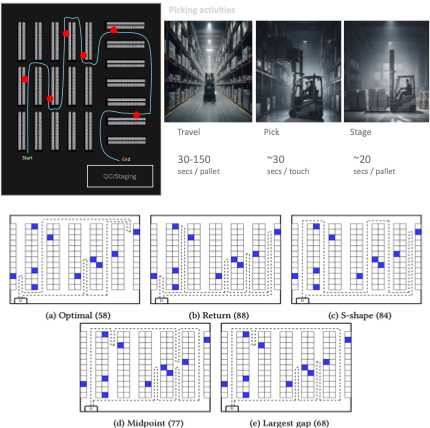
Plan waves, batches and picking routes around live orders, pick-face availability and carrier cut-offs.
35% less pick travel
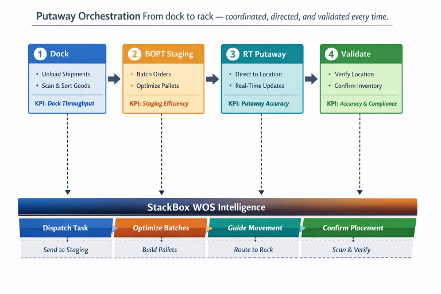
Select storage locations using product velocity, slotting strategy, aisle balance and racking occupancy. Keep fast-moving stock accessible.
25% less putaway travel
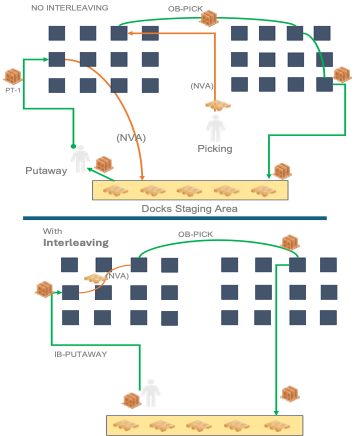
Combine putaway, picking and replenishment in a single equipment trip. Assign the next nearby task as soon as the current one is complete.
25–40% higher productivity
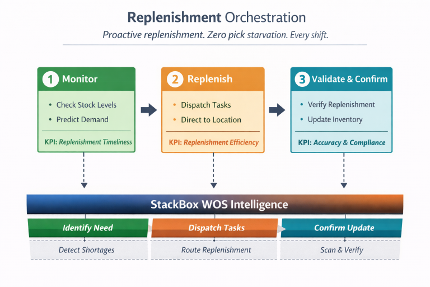
Monitor pick-face stock and trigger replenishment before it runs out. Coordinate replenishment with active picking waves.
60% shorter replenishment lead time
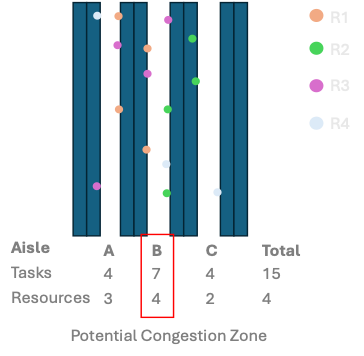
Use virtual aisle locking to prevent conflicting movements. Route equipment using real-time occupancy, task sequence and aisle constraints.
Prevent aisle deadlocks
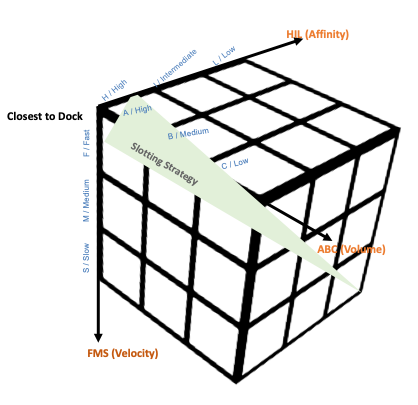
Track how well current slotting matches the actual order profile. Identify relocations and trigger a new slotting plan when compliance drops.
15–25% less pick travel after re-slotting
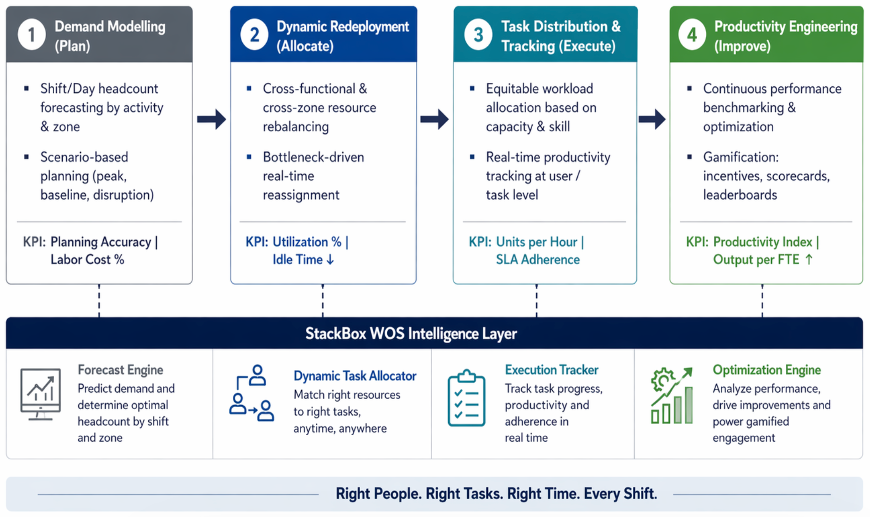
Track workload, equipment utilization, zone productivity and SLA progress together. Recommend redeployment and automatically reallocate resources where configured.
14% improvement in on-time dispatch
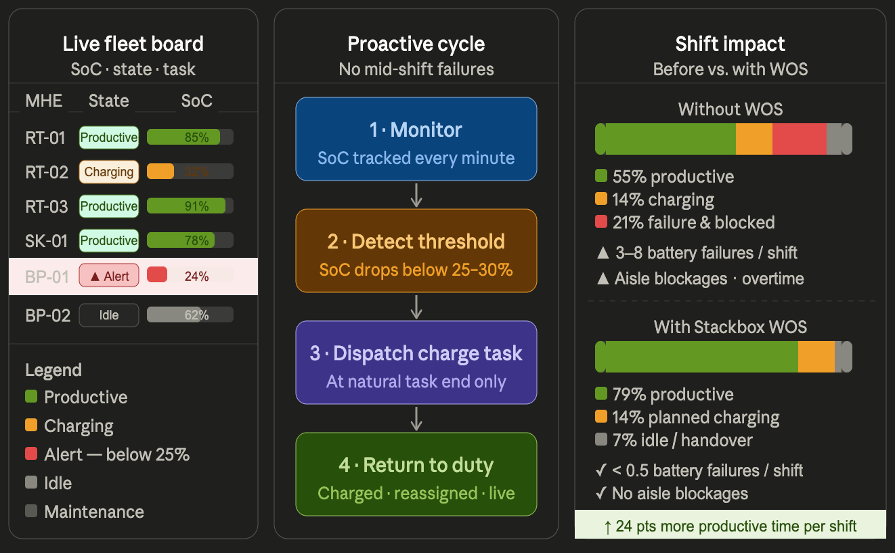
Monitor equipment charge levels and schedule charging within the shift plan before batteries become critical.
Automated charging rotation
Outcome figures are from Stackbox's published WOS page. Results depend on facility conditions and implementation scope.
WHY STACKBOX WOS
Connect facility design, daily planning and task execution. Track slotting compliance and act when layouts need to change.
Add AMRs, AGVs, handling equipment and automation from different vendors under a shared orchestration layer.
Detect delays, assess their impact and recommend corrective action before disruption spreads across the shift.
Start with foundational capabilities and expand as each phase delivers operational value.
Check equipment type, operator certification, battery state and current location before dispatching work.
Use WOS natively with Stackbox WMS or connect it to SAP, Oracle, Manhattan and other warehouse systems.
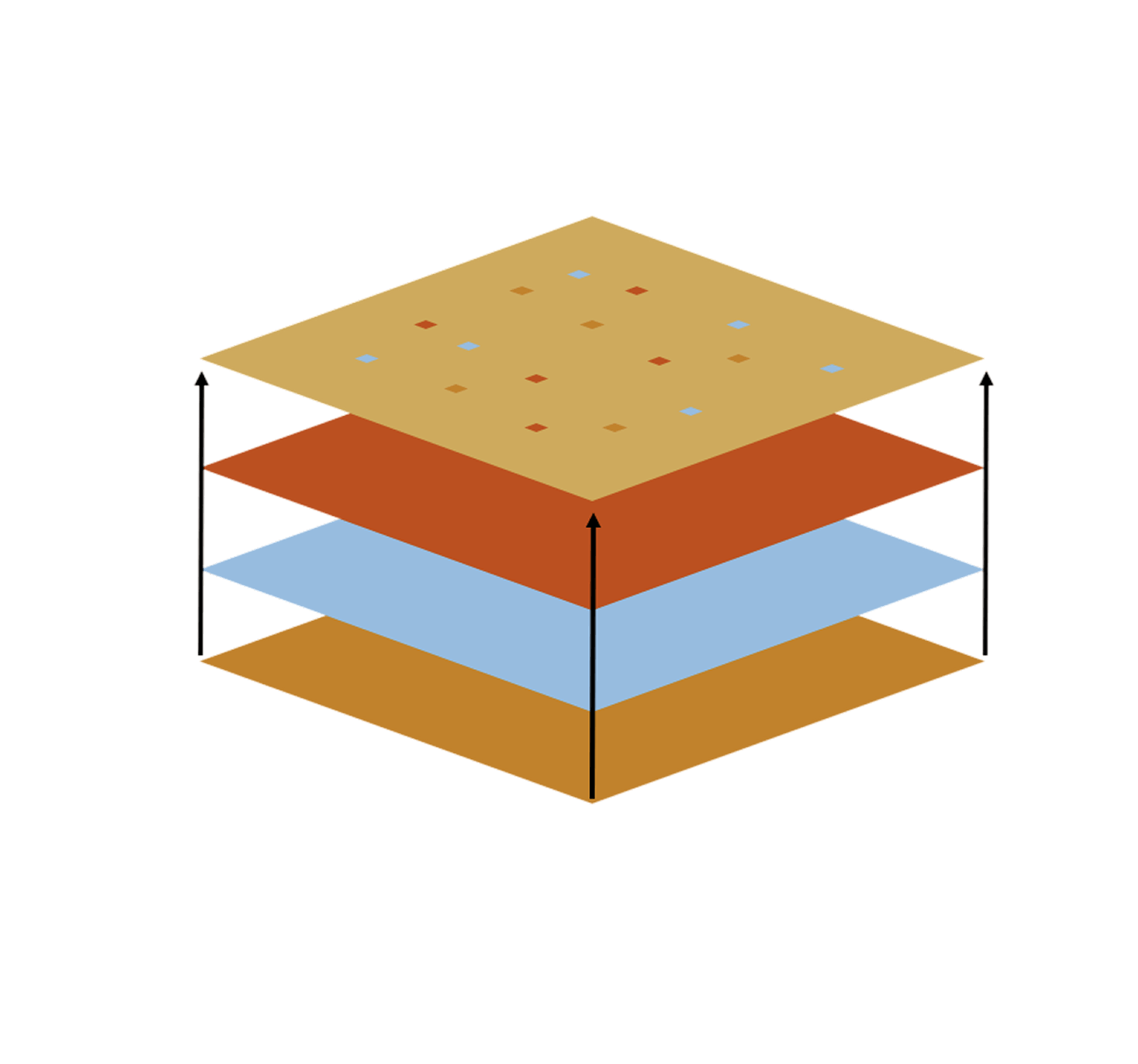
THE MATERIAL GRAPH
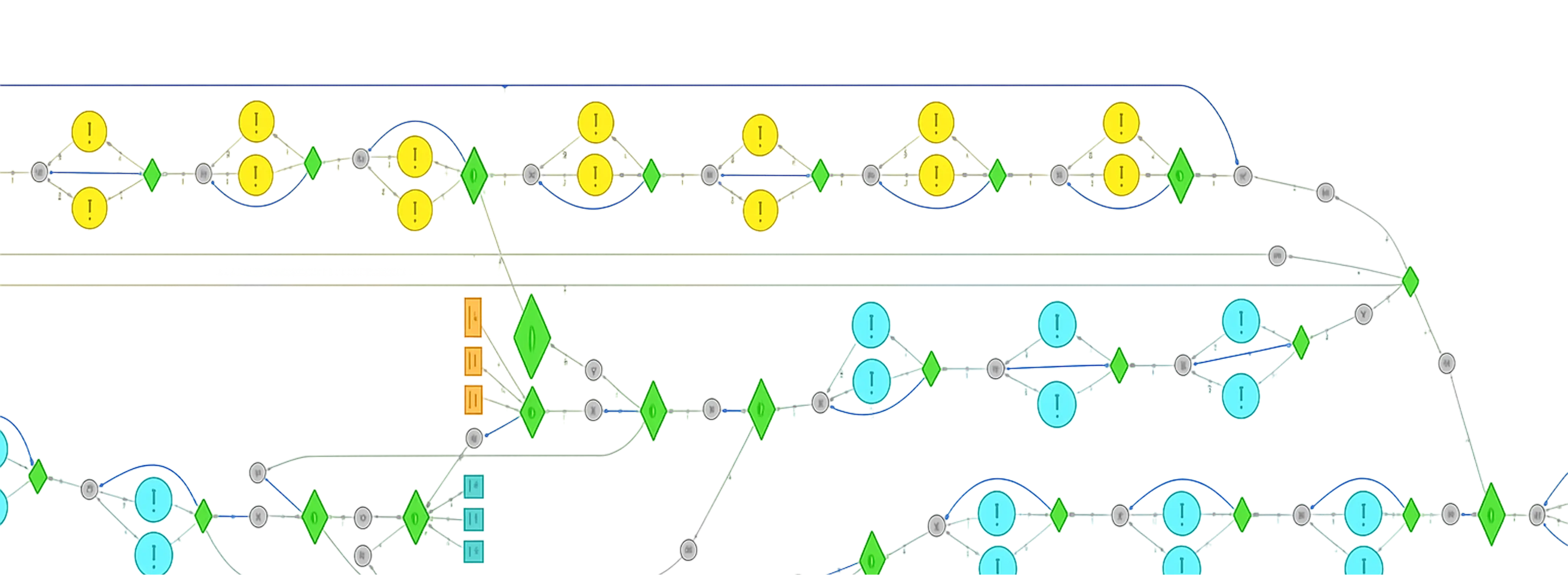
WOS models tasks, handoffs and decision points across receiving, storage and dispatch. That shared view helps identify bottlenecks and coordinate changes across the whole facility.
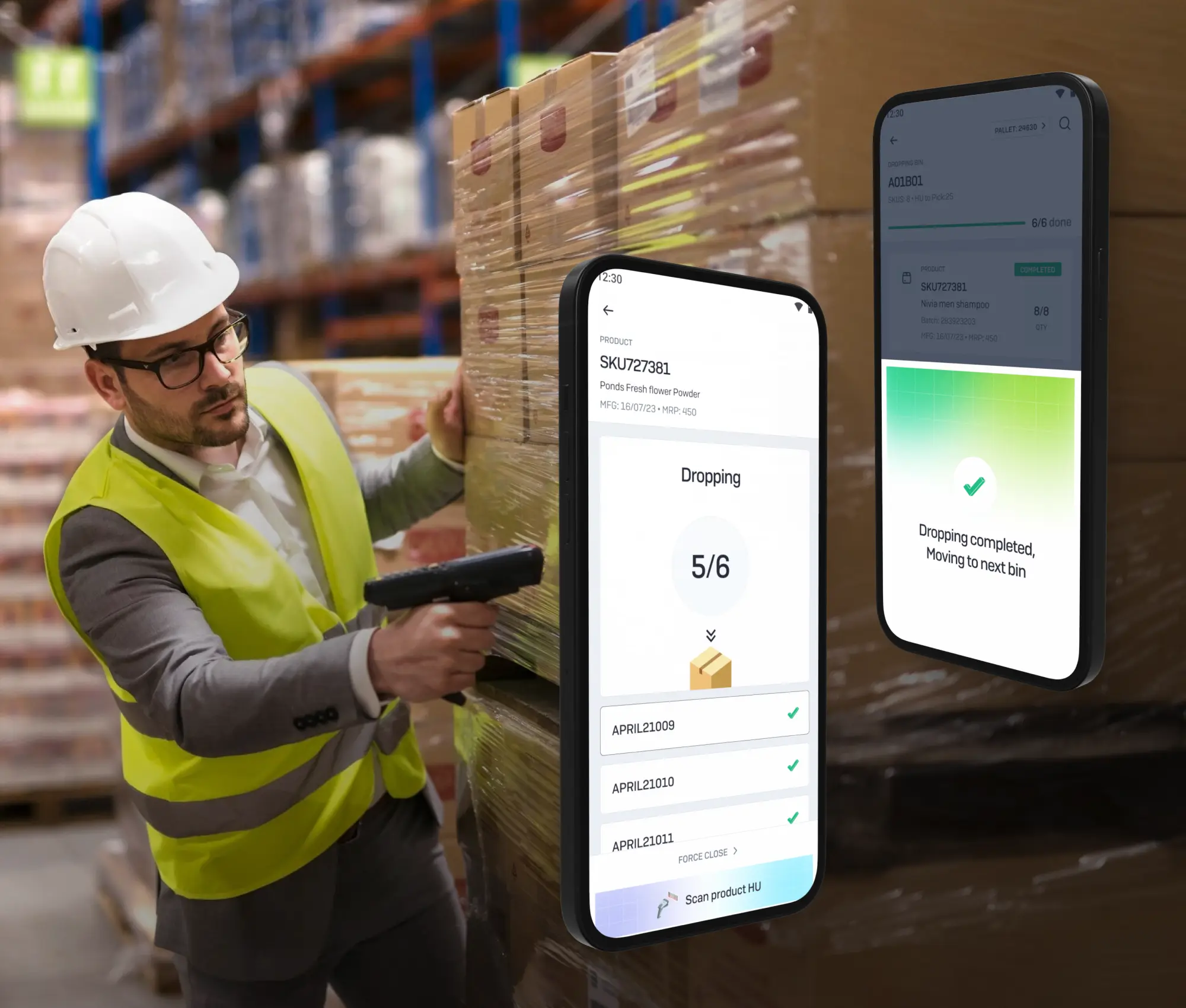
UNIFIED NAVIGATION
A Unified Navigation Engine that seamlessly augments, translates, and overlays navigation schemas from multiple mobile automation vendors — unifying them into a single global warehouse map.
Whether you're running AMRs, AGVs, or mobile pickers from different OEMs, Stackbox WOS eliminates silos by:
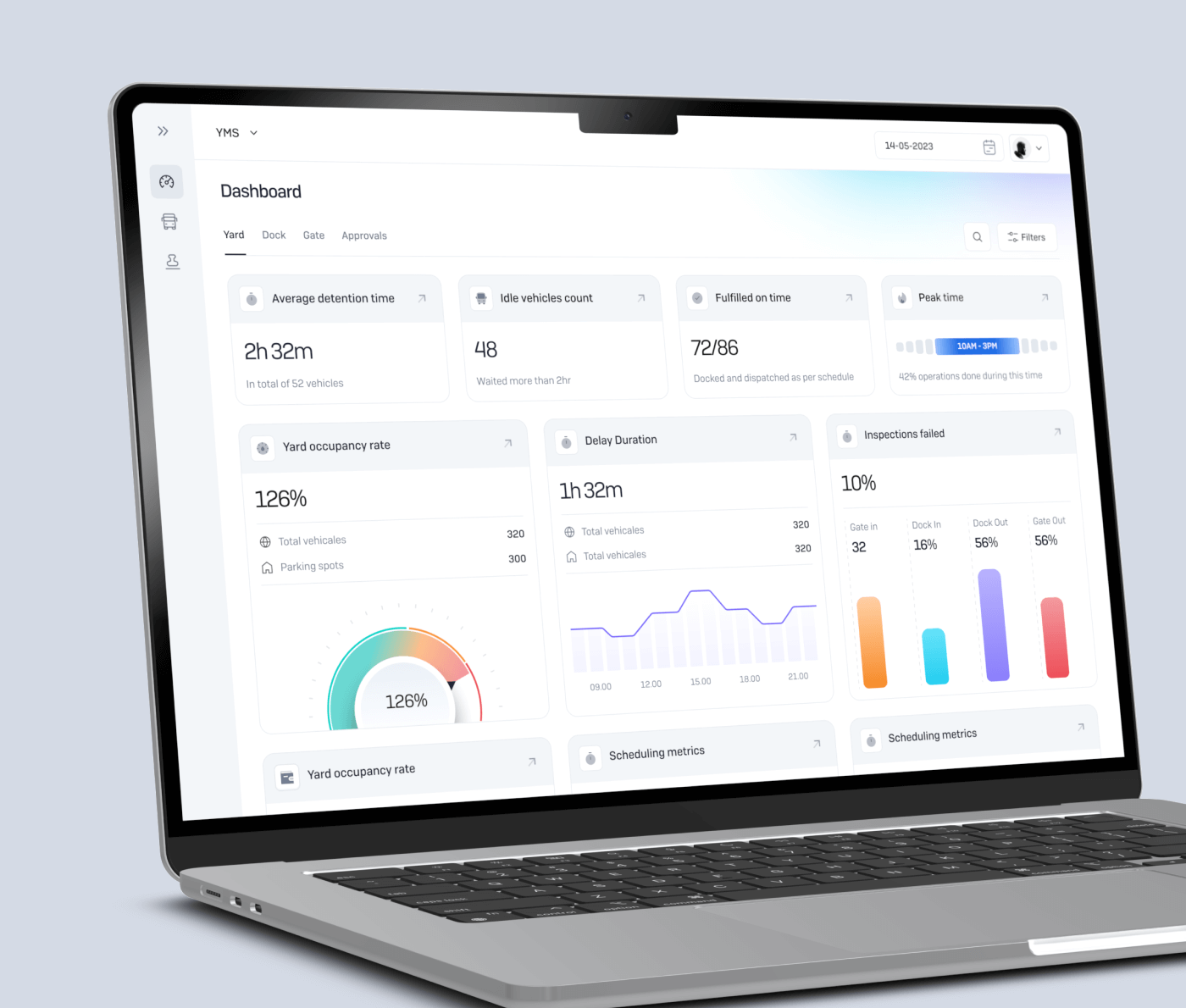
WAREHOUSE MISSION CONTROL
Real-time visibility + AI-powered foresight.
A WOS coordinates people, material handling equipment, mobile robots and fixed automation across a warehouse. It continuously plans and adjusts tasks, resources and routes as conditions change.
A WMS manages inventory and transactions. A WES coordinates execution workflows. WOS plans and adjusts tasks across the facility in real time. A control tower shows status and exceptions.
No. WOS runs natively with Stackbox WMS. It can also connect above another WMS, including SAP, Oracle and Manhattan.
Yes. Stackbox WOS supports mixed fleets and equipment vendors through its interoperability layer, using REST, MQTT, OPC-UA, TCP/IP and custom OEM integrations. MHE means material handling equipment, including reach trucks, pallet trucks and stackers.
Stackbox WOS supports FMCG, retail, e-commerce, 3PL, pharma and manufacturing distribution centres, including high-volume operations with mixed equipment fleets and strict carrier SLAs.
Yes. The platform is designed for mechanized distribution centres with multi-tier racking, mixed MHE fleets, high SKU velocity and omnichannel order profiles. Stackbox describes deployments across India and Southeast Asia.
The current WOS page reports 25% higher throughput, 50% shorter dock-to-stock time, 35% less pick travel and 99.5%+ pick accuracy. These are published deployment claims, not guarantees for every facility. A demo can help establish the baseline and scope for your operation.
Implementation is phased. Foundational capabilities such as vehicle scheduling, dock allocation, work planning and task allocation are introduced first. The scope and timing depend on your facility, systems and selected capabilities.
Yes. Each distribution centre runs site-level orchestration while a central control tower supports cross-site visibility, SLA tracking and performance benchmarking.
WOS coordinates movement within a warehouse. Transport route optimization plans movement between facilities. Stackbox WOS and TMS can work together.
LET'S TALK ABOUT YOUR OPERATION
See how WOS fits your warehouse, systems and equipment.